

When Headaches Keep Returning: Could Your Neck Be Contributing?
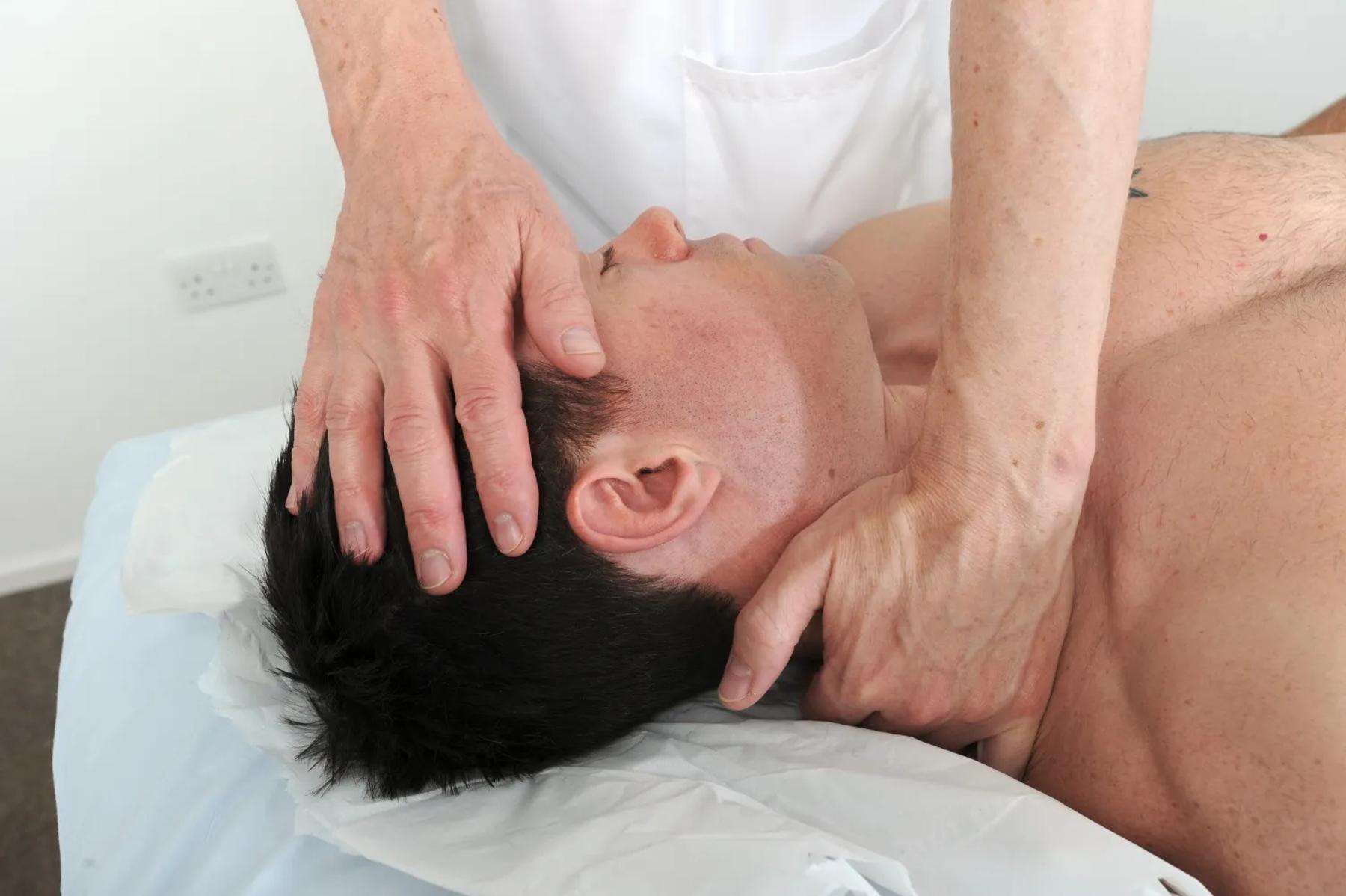
How tension-type and cervicogenic headaches differ, what the research suggests and how an osteopathic assessment may help.
As routines settle again in October, many people return to longer periods of desk work, commuting and indoor activity. For someone already prone to headaches, recurring pressure around the forehead, temples or back of the head can gradually become an accepted part of the working week.
The important question is not simply where the pain is felt. It is whether anything in the neck or surrounding musculoskeletal system may be contributing, and whether addressing those factors produces a meaningful change.
In Part 1: Understanding Osteopathy and Headaches, we explained how sustained muscular loading, reduced neck movement and referred pain may influence certain headache patterns. We also covered common physical contributors, practical self-care and the warning signs that require medical attention. This second article moves forward: what does an osteopath assess, what may treatment involve and how should we judge whether it is helping?
Start with Headaches Part 1 Read the introductory anatomy, common physical contributors, self-care advice and fuller warning-sign section.
Two headaches that can appear similar
We see tension-type and cervicogenic headaches very frequently in the practice. They may share neck symptoms, but the reasoning behind them is different.
Tension-type headache
- A primary headache disorder.
- Often pressing or tightening rather than strongly pulsating.
- Commonly affects both sides of the head.
- Usually mild to moderate and not aggravated by ordinary daily activity.
- Muscle tenderness may be present without proving that the neck is the cause.
Cervicogenic headache
- A secondary headache attributed to a disorder or lesion in the neck.
- May be one-sided and associated with reduced neck movement.
- Can be provoked by particular movements or positions.
- Pain may travel from the back of the head towards the front.
- These features raise suspicion but do not establish causation on their own.
Other headache types also matter There are many other headache disorders, including migraine, cluster headache and headaches related to illness or medication. These are not headache types we regularly see or treat as osteopaths; patients should seek appropriate medical guidance for diagnosis and management.
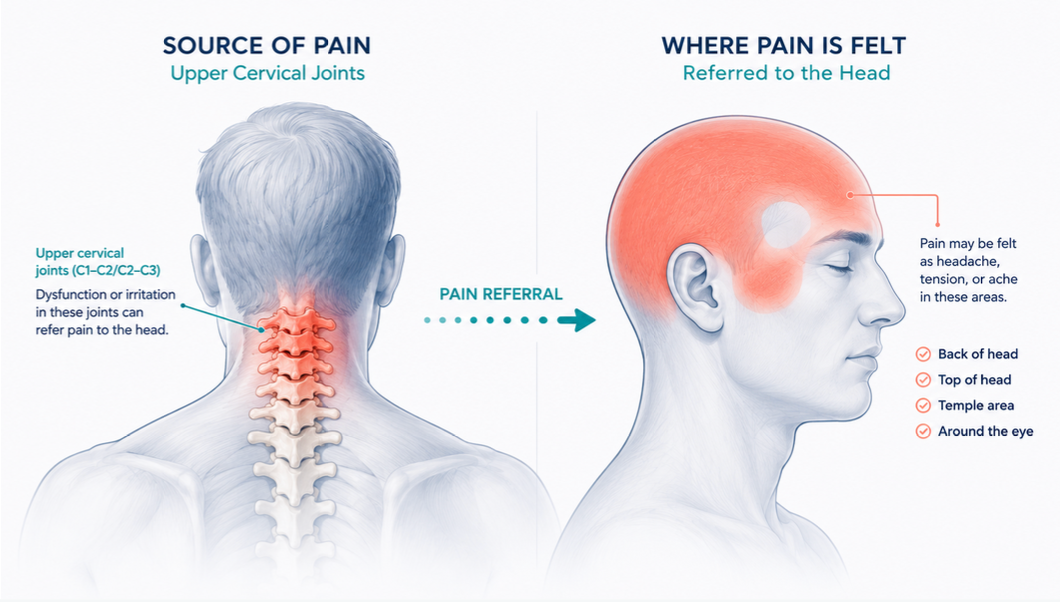
Upper cervical joints can refer pain into the back or top of the head, the temple and the area around the eye.
What can an osteopath do?
An osteopath considers the headache in the context of the person experiencing it.
This does not mean assuming that every part of the body is involved. An osteopath will combine the patient history with the examination findings to make a reasoned and logical hypothesis based on their osteopathic theories and beliefs.
The person functions as a whole Neck and upper-back muscular tension occur for many reasons. Stress, both physical and emotional, posture, jaw and dental problems, or previous injury will all have an influence.
Structure governs function When structure is compromised, function is impaired. For example, a restricted neck vertebra or upper thoracic vertebra will cause increased muscular tension, which may cause headaches.
The body continually adapts The body should be able to sort itself out and continue to operate pain-free. If it cannot, it will send a signal, which is pain. If this remains or regularly comes back, an osteopath can help explore why.
Treatment is tailored to the patient Osteopathy is patient-centred, meaning the treatment will be tailored to the patient's needs, preferences and responses.
"Holistic, or whole-person, care does not mean looking for a fault in every part of the body. It means understanding the headache pattern, the patient's health and the physical demands being placed on them, then deciding which findings are genuinely relevant." Chris Ruddick D.O. Osteopathiepraktijk Tervuren
What we look for in the treatment room
The assessment starts with the headache pattern, not with a predetermined osteopathic explanation. We look for a meaningful relationship between the patient's symptoms and the examination findings.
- Is neck movement reduced or uncomfortable?
- Does a movement reproduce the familiar headache?
- Is there associated neck or upper-back pain?
- Is there reduced mobility in the rib cage or thoracic spine?
- Is there muscular tension in the neck or upper back?
- Do the findings offer a plausible explanation of the symptoms being experienced?
What might osteopathic treatment include?
Where the assessment suggests that musculoskeletal factors are relevant, treatment may combine hands-on care with active management.
- Gentle mobilisation — Selected to improve comfortable movement rather than force a joint into an ideal position.
- Soft-tissue care — Used where muscular tenderness or load intolerance appears clinically relevant.
- Spinal manipulation — Gentle, specific manipulation of the spinal segment.
- Targeted exercise — For the neck, upper back or shoulders where the assessment identifies a useful goal.
- Movement strategies — Practical ways to vary activity and improve tolerance during work, travel or exercise.
- Review and referral — Progress is measured, and the plan changes when treatment is not producing useful results.
Not every patient requires the same techniques. The aim is not to "realign" the body or impose one perfect posture. Human bodies are variable and adaptable. The practical objectives are to improve comfortable movement, reduce the effect of symptoms and support a return to normal activity.
What does the evidence suggest?
Research into manual and exercise-based care is encouraging, but it is not uniform.
For cervicogenic headache, systematic reviews suggest that manual therapy and exercise may reduce headache intensity, frequency and disability in some patients. Many included studies have methodological limitations, and the size and durability of benefit vary.
For tension-type headache, reviews also report potential improvements following manual therapy. However, treatment protocols differ substantially and no single technique has emerged as consistently superior.
Most studies investigate manual therapy or physical rehabilitation rather than osteopathy as a complete system of individualised care. The findings are relevant because osteopaths may use comparable mobilisation, soft-tissue and exercise approaches, but they do not validate every technique or guarantee an individual response.
Evidence in plain language Hands-on and exercise-based care may help selected patients. The evidence supports a reasoned trial with clear goals, not an automatic course of treatment or a promise of a cure.
Three useful steps while deciding what to do
- Record the pattern — Note when the headache begins, how long it lasts, associated symptoms and what medication you take.
- Keep moving within comfort — Regular comfortable movement is usually more useful than repeatedly testing a painful neck or holding one rigid position.
- Review frequent medication use — Discuss regular use of acute headache medicines with a doctor or pharmacist rather than changing prescribed treatment without advice.
When osteopathy is not the first step
Most headaches are not caused by a dangerous disorder, but certain presentations require urgent medical assessment. Part 1 contains the fuller warning-sign section. Osteopathic assessment should never delay appropriate medical care.
- A sudden, exceptionally severe headache
- New weakness, numbness, speech disturbance or confusion
- Loss of consciousness or seizure
- Fever with marked neck stiffness or systemic illness
- A significant head or neck injury
- New visual loss or a painful red eye
- A substantial unexplained change in the usual pattern
- Symptoms that are worsening or do not fit a familiar diagnosis
A considered next step
Osteopathy cannot help every headache, and not every headache accompanied by neck pain originates in the neck.
For selected patients osteopathy can offer a useful non-pharmacological perspective. Its value lies not only in hands-on treatment, but in bringing together the headache history, medical context, physical findings, lifestyle demands and patient goals.
At Osteopathiepraktijk Tervuren, assessment comes before treatment. The plan is individualised, progress is reviewed and referral is made when another form of care is more appropriate.
References
- Headache Classification Committee of the International Headache Society. International Classification of Headache Disorders, 3rd edition: tension-type headache. 2018.
- Headache Classification Committee of the International Headache Society. Cervicogenic headache. ICHD-3. 2018.
- Bini P, et al. The effectiveness of manual and exercise therapy on headache intensity and frequency among patients with cervicogenic headache: a systematic review and meta-analysis. 2022.
- Cumplido-Trasmonte C, et al. Manual therapy in adults with tension-type headache: a systematic review. 2021.
- National Institute for Health and Care Excellence. Headaches in over 12s: diagnosis and management. CG150; last updated 2025.
- General Osteopathic Council. What is osteopathy? Accessed 2026.
This article provides general information and does not replace individual medical advice. Consult an appropriate healthcare professional for advice specific to your symptoms and circumstances.

Recent articles
View all
Could your shoulder pain ease with osteopathy?
Four shoulder patterns osteopaths regularly see, what an osteopath can do, and what current research suggests.
Osteopathic Care for Babies: What You Need to Know

Osteopathy and Arthritis: Finding Spring in Your Joints
Does spring take a toll on your joints? Discover how osteopathy can help manage arthritis symptoms, and how our patient Mary was able to get back into her garden thanks to a targeted treatment.